Goldmund's Departure from Mariabronn
Narcissus and GoldmundGoldmund's Departure from Mariabronn is the moment Goldmund leaves the cloister again after a period of friendship, work, and artistic achievement. He departs not because he has fallen out with Narcissus or the community, but because he believes his art and life require another encounter with the world. His completed Madonna becomes both the culmination of his time at the abbey and the work he leaves behind as he resumes his unsettled path.
The work that precedes the departure
Goldmund's decision to leave follows a sustained period of work at Mariabronn. He has returned to the cloister as a mature, experienced artist, and he wants his first contribution there to belong to its architecture and daily life rather than stand as an unrelated display. He therefore proposes carved panels for the steps and lectern of the raised niche in the refectory, where a brother reads from the lives of the saints during meals. The Abbot approves a design that joins images of the created world and the word of God: the oak-grown stairs are to carry scenes of nature and the lives of patriarchs and prophets, while the upper parapet bears the four apostles. Among them, Goldmund intends to preserve the likenesses of Abbot Daniel, his successor Father Martin, and Master Niklaus.
That demanding lectern work absorbs him so completely that he withdraws from much of the cloister's ordinary life. He works with his assistant Erich and allows almost no one else into the workshop. The work's difficulties are not merely obstacles: each resistance teaches him and sharpens his sensitivity. In the course of this concentrated effort, he nearly forgets the cloister and even Narcissus, who visits but sees only drawings. Goldmund's creative return to Mariabronn is therefore real, but it does not turn into a permanent settlement.
The Madonna and the source of his art
The departure is prepared by Goldmund's earlier encounter with a wooden Madonna in a church. He has gone there after confessing, burdened in particular by the death of Viktor, and sees the statue in a shaft of sunlight. Its delicate figure and living expression hold him so strongly that, although he turns away several times, he keeps returning to look. The priest explains that the Madonna is controversial: some consider it too modern and worldly, while others value it; it was donated to the cloister a year earlier and made by Master Niklaus. Goldmund's admiration for the work sends him toward the sculptor and the vocation that will shape the rest of his life.
The image also connects Goldmund's art to a personal history that cannot be reduced to any one model. He has imagined creating an image of the original mother, a figure formed from the memory of his own mother and continually reshaped by the women and experiences of his life. His first successful clay figure had been Julie, Lydia's sister, but Niklaus considered that work too worldly to have it cast in metal. Later, Goldmund's wooden Saint John gave form to his friendship with Narcissus. At Mariabronn, his Madonna draws instead on youth, travel, and first love. As he explains to Narcissus, he needed his whole youth, his wandering, and his many courtships to make the statue; he fears that the source from which he has drawn will soon be exhausted.
Goldmund does not present the Madonna as an arbitrary commission or as proof that he has finished with the world. He plans to complete it, take a long leave, and retrace the experiences that had become dear to him. He says that he has never taken payment for his work at Mariabronn and now accepts Narcissus's offer: he will have new clothes made, then ask for a horse and a few gold pieces. The work's completion and the preparation for departure thus proceed together. He finishes the figure with loving care, attending to its hands, face, and hair, and delays the farewell through repeated final touches.
Farewell and renewed wandering
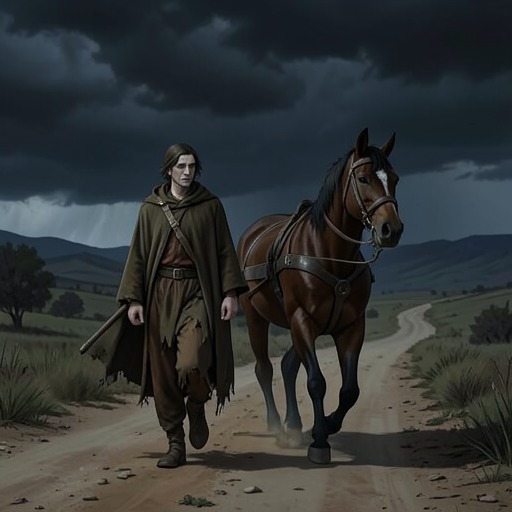
When the time comes, Goldmund surprises Narcissus by appearing to say goodbye. He has already confessed and received communion; now he asks for a blessing for the road. He has made a plain riding outfit and boots, and leaves in new clothes and a new cap. The farewell is difficult for both men, though Goldmund conceals his own feeling behind abruptness and an air of indifference. He reassures Narcissus that they will meet again if the horse does not cause him harm, and asks him to watch over Erich. He also gives a specific instruction about the Madonna: it must remain standing in his room, and Narcissus must keep the key in his own hands.
Goldmund's readiness to go falters at the threshold. He admits that the journey had seemed appealing, but that leaving now feels less enjoyable than he expected. He dislikes his dependence and compares it to an illness, recalling that Master Niklaus had been similarly affected. Rather than prolong the conversation, he asks Narcissus for a blessing and rides away. The departure is therefore neither an easy escape nor a decisive rejection of the cloister: Goldmund wants to leave, yet the act of leaving exposes the affection and dependence that his wandering life cannot erase.
What the departure means to Narcissus
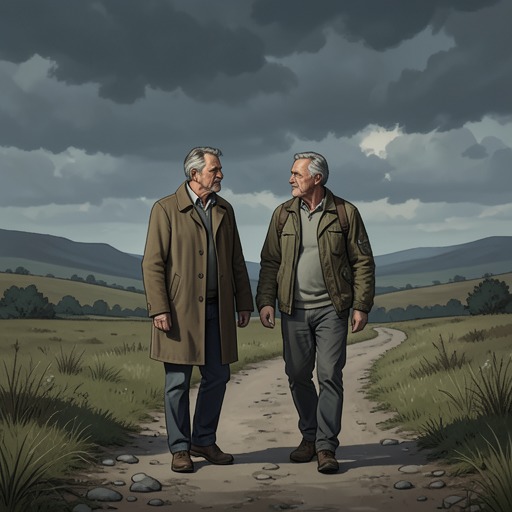
After Goldmund has gone, Narcissus worries about the course his friend's life may take. He imagines him following his powerful desires and curiosity through the world, risking new sins, danger, imprisonment, or death. The fear is sharpened by Narcissus's knowledge of Goldmund's past, including his involvement in violence and captivity. Yet worry is not the whole of his response. Deep down, he is happy that Goldmund remains difficult to tame and has broken out again rather than consenting to a life that would suppress his nature.
Narcissus also turns the departure into a question about his own conduct. He wonders whether he should have shown more plainly how much he loved Goldmund, how little he wanted him to become someone else, and how much he had gained from his friend's presence and art. He cannot know whether greater candor might have kept Goldmund at Mariabronn. The scene leaves that possibility unresolved: affection has not overcome their difference, and neither friend can make the other's path his own. Goldmund rides back toward uncertainty, while the Madonna remains behind as the material trace of what his time with Narcissus produced.